zsty.us

Before / After · Case Study

Village of Hope Hospital — a legacy charity site rebuilt for donor conversion

  • Nonprofits & Causes

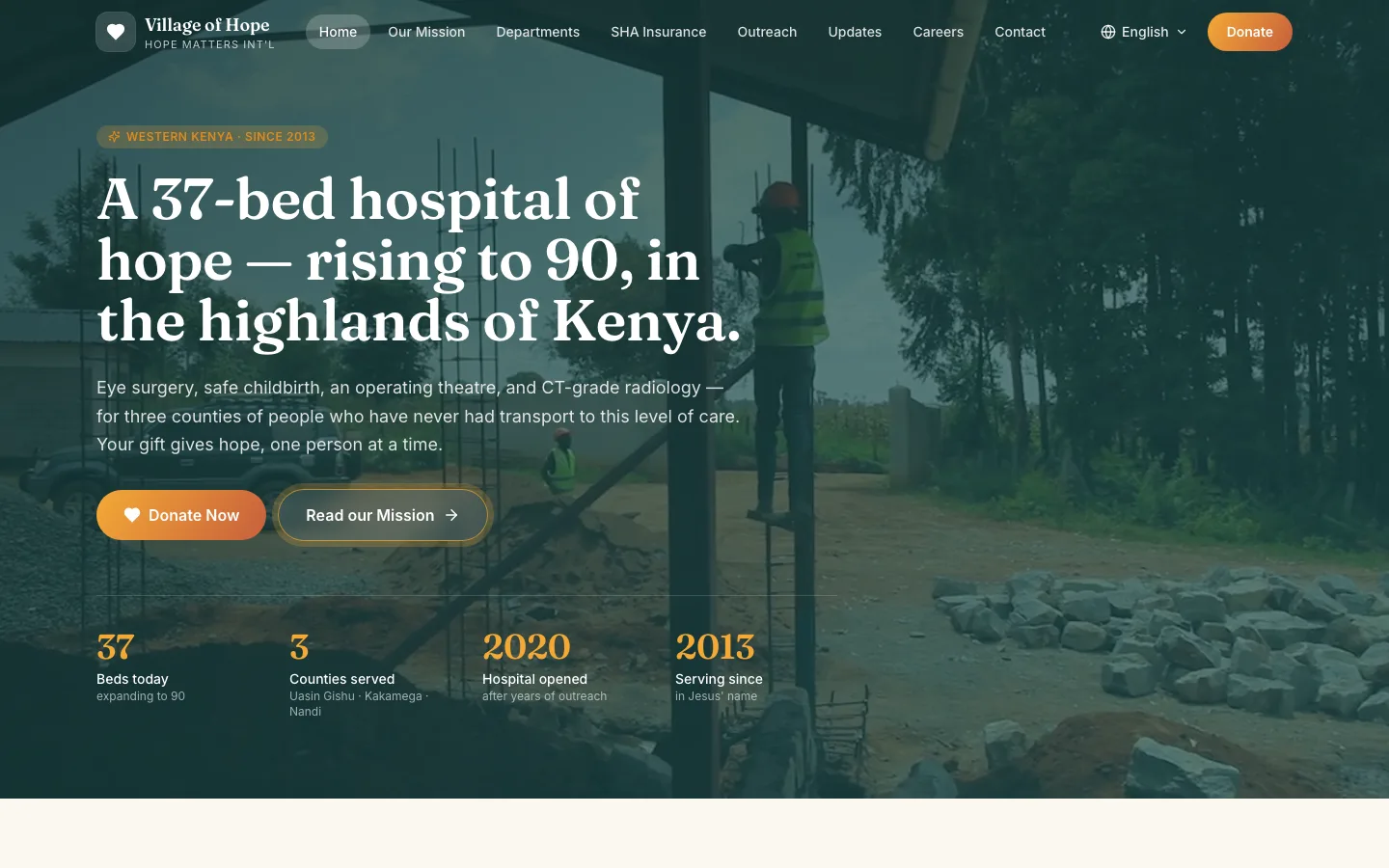
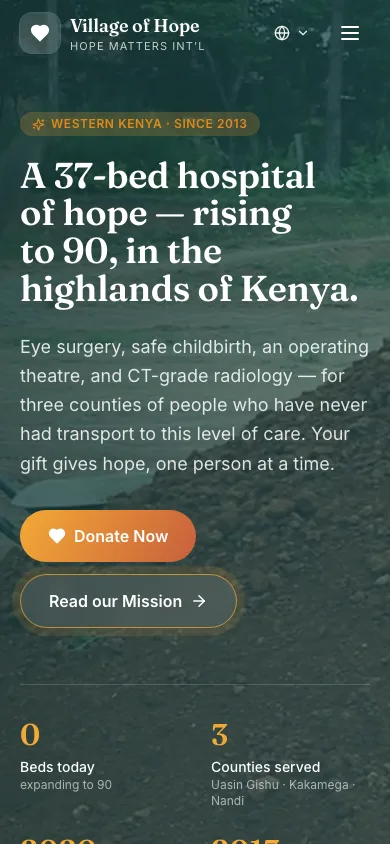
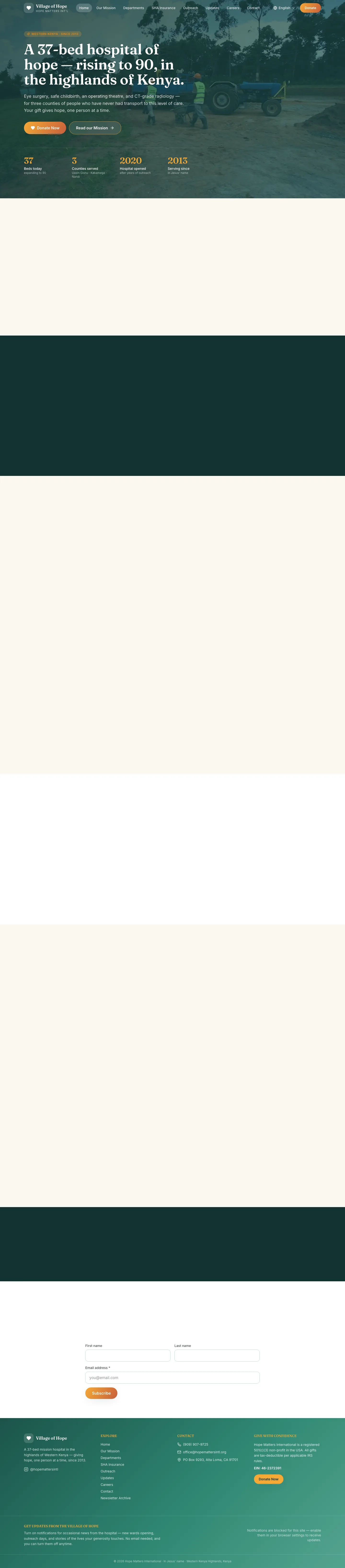
Hope Matters International runs a 37-bed mission hospital in rural Kenya, scaling toward 90 beds. Its legacy site buried that story in a dated builder template with no clear giving path. The rebuild — built autonomously end-to-end in a single run on the operator's build machine — is a 14-page donor-conversion site in English and Swahili, grounded in six research artifacts on the hospital and region. Donation rails are Stripe-ready and deliberately stubbed: a compliance doc gates real payments on the charity connecting its own Stripe account, so donor money can never route through anyone else's books.

A 37-bed hospital scaling to 90 deserves better than a template — and donors deserve rails that route to the charity's own account, not a middleman's.
🔒hope-matters-intl.vercel.app
jackiej.events — modern site

Receipts — measured

Numbers that moved.

1
Pages telling the hospital's story
was 1
1
Languages served
was 1
37 beds
Beds today → the scale-up the site raises for
was 37 beds
  • Legacy builder page → 14-page donor-conversion site
  • Bilingual: English + Swahili with auto-translate
  • 6 research artifacts ground every claim about the hospital + region
  • Donations Stripe-ready but gated on the charity's own Stripe — by design

The pixel diff

Overview, then the walkthrough.

Left: everything the legacy site shipped — frozen in place. Right: an auto-scrolling tour of the rebuild, from hero to booking. No slider to fight with.

Before — the overview
🔒hopemattersintl.org
Before — the overview

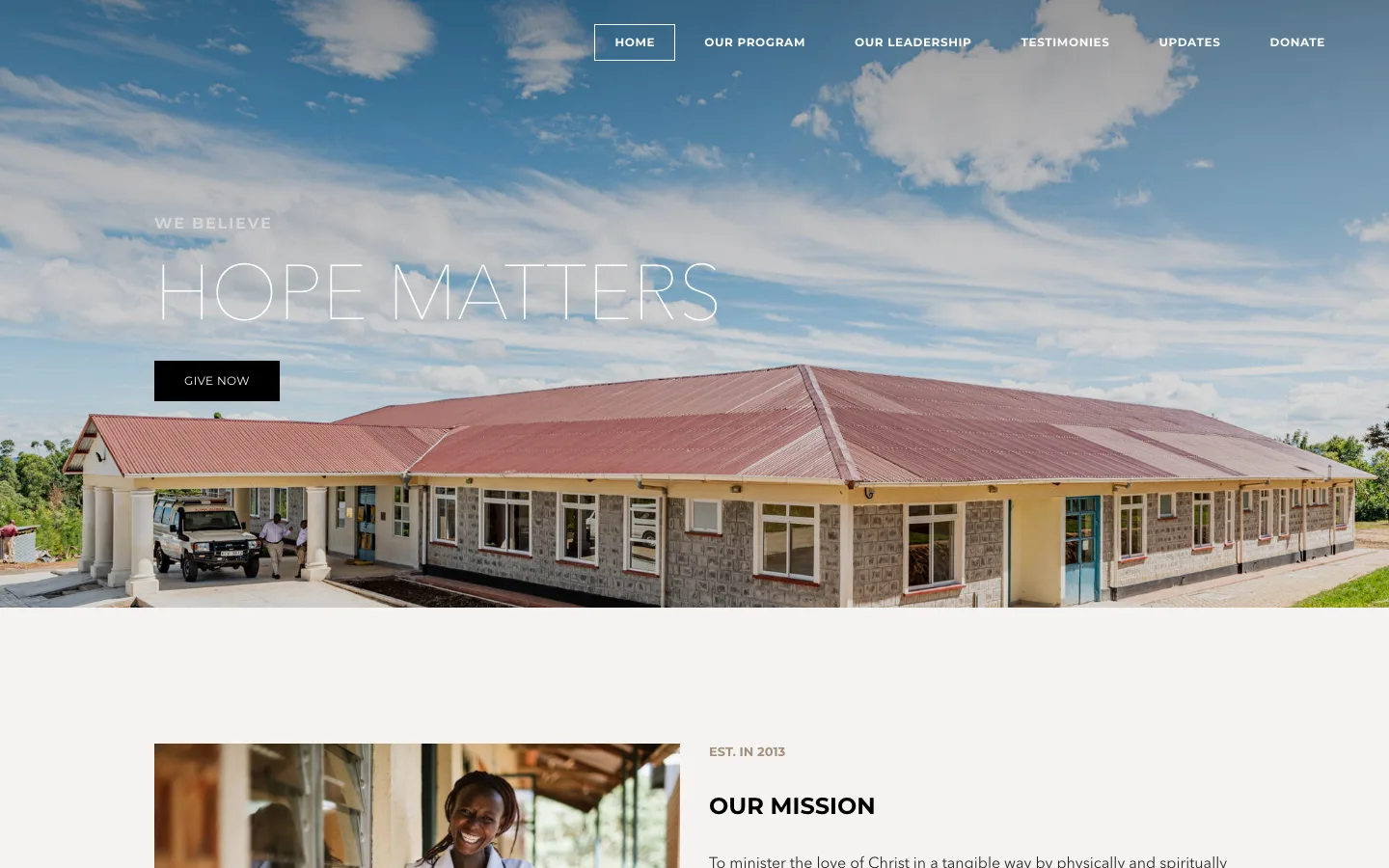
This is everything the legacy site had to offer above the fold. No pricing, no calendar, no booking — the funnel ended at a mailto.

After — scroll through what shipped
🔒hope-matters-intl.vercel.app
After — scroll through what shipped

Auto-scrolls through the modern site so you can see the booking surface, the package grid, the pricing table, and the calendar inline — without leaving this page.

The four beats

Problem · Insight · Build · Outcome.

Scroll past the legacy frame. The four beats land in order. At the end, the modern site fades into the same window.

🔒hopemattersintl.org
Legacy
01 · Problem

A working hospital, invisible behind a template.

The legacy site's page title was literally 'HOME'. A 37-bed hospital with a real expansion plan presented like a parked page — no story arc, no giving path, English only.

02 · Insight

Donor conversion is a narrative problem before it's a payments problem.

The site's job is to walk a stranger from 'where is this?' to 'here's my card' without a leap of faith. That takes researched specifics — beds, region, outcomes — in the donor's language and the community's, with the payment rail as the last step, not the first.

03 · Build

One autonomous run: research → 14 pages → bilingual → staged rails.

Six research artifacts on the hospital and region, then a 14-page EN/Swahili build on Next.js 15 + Neon, donation flow wired to Stripe but compliance-gated. Built end-to-end in a single run on Bruce, reviewed after.

04 · Outcome

Live preview; rails arm when the charity's Stripe connects.

hope-matters-intl.vercel.app is live. The legacy site still answers at the apex — cutover and Stripe connection are the board's call, and the site is ready for both the day they make it.

🔒hope-matters-intl.vercel.app
Modern

Architecture

One chain replaced by another. Receipts above.

Old stack
  • Builder template
  • EN only
  • No giving path
New stack
  • Next.js 15 + Neon
  • 14-page donor journey
  • EN + Swahili
  • Research-grounded content
  • Stripe staged behind compliance gate

What changed

Grouped by what kind of system shipped.

Each claim ships with concrete evidence — env vars, table names, cadence chips. No marketing fluff.

Retention

Donation rails gated on the charity's own Stripe — a compliance feature, not a gap

The giving flow is built and Stripe-ready, and deliberately stubbed: a compliance doc gates activation on the charity connecting its own Stripe account. No donor dollar can ever route through the builder's books — the honest architecture for third-party nonprofit work.

Before
No structured giving path at all.
After
A complete donation flow, armed the day the charity's own Stripe connects.
Design

Bilingual by design — English for donors, Swahili for the community

Every page ships in English and Swahili with auto-translate underneath — the donor audience and the served community read the same site. Fourteen pages walk need → work → impact → give, grounded in six research artifacts on the hospital and region rather than boilerplate charity copy.

  • 14 pages, EN + Swahili
  • 6 research artifacts backing the medical + regional claims
Agent backbone

Built autonomously end-to-end in one run

The entire rebuild — research, information architecture, copy, build, deploy — ran as a single autonomous session on the operator's build machine (Bruce), with human review at the end rather than in the loop. A live demonstration of the agent pipeline the rest of this catalog is built with.

← All rebuilds

Village of Hope Hospital — a legacy charity site rebuilt for donor conversion — zsty.us