Categories restructured around the actual sales channel
Flower / rosin / extracts / trim / smalls / pharma (pending supply line). Each is its own surface, not a single 'Products' page.
Before / After · Case Study
The old site was a brochure — a logo and some photos with nothing underneath: no way to sell wholesale, no compliance tracking, no connection to the sister brands. The brand restarted on a new web address with a storefront organized around its six real sales channels, wholesale ordering and state compliance wired straight in, and rewards and chat shared across the whole brand family.
At a glance
Security
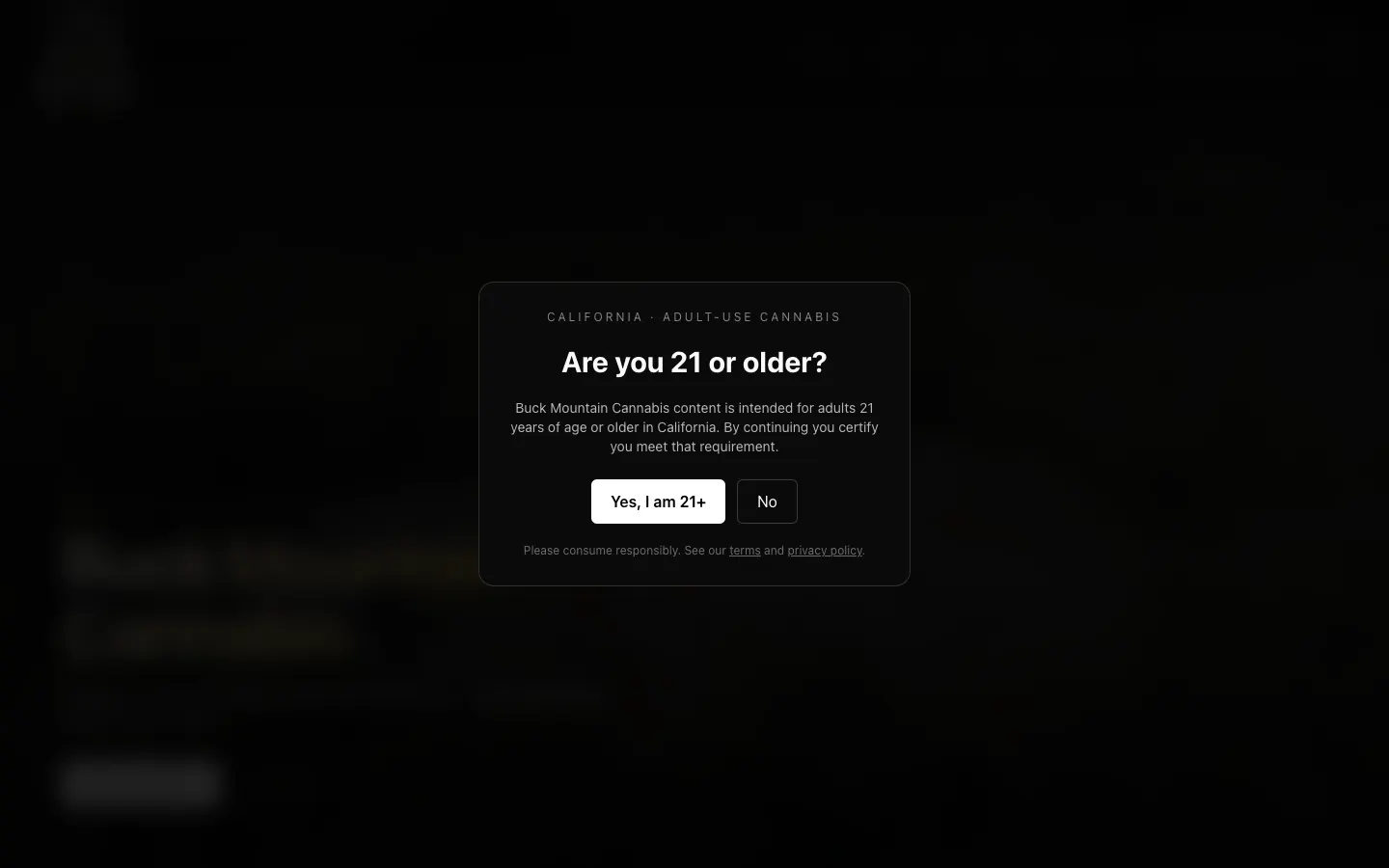
A 21+ age check greets every visitor before any product is shown, matching what a cannabis brand is expected to enforce.
Design
The catalog was rebuilt around the channels the product actually sells through — flower, rosin, extracts, trim, smalls, and a pharma line staged for when its supply is ready — each with its own surface instead of one generic products page.
Selling & payments
The wholesale catalog feeds in directly from the distributor, and every batch carries state-mandated compliance tracking, so the storefront reflects what can legally sell right now.
Agents
The same live-chat window used by the sister brands is dropped in, so a question asked here lands in the one shared inbox the owner already watches.
Search visibility
The old web address permanently forwards page-by-page to the new one, so existing links and search standing carry over instead of dying with the rebrand.
The pixel diff
Left: everything the legacy site shipped — frozen in place. Right: an auto-scrolling tour of the rebuild, from hero to booking. No slider to fight with.
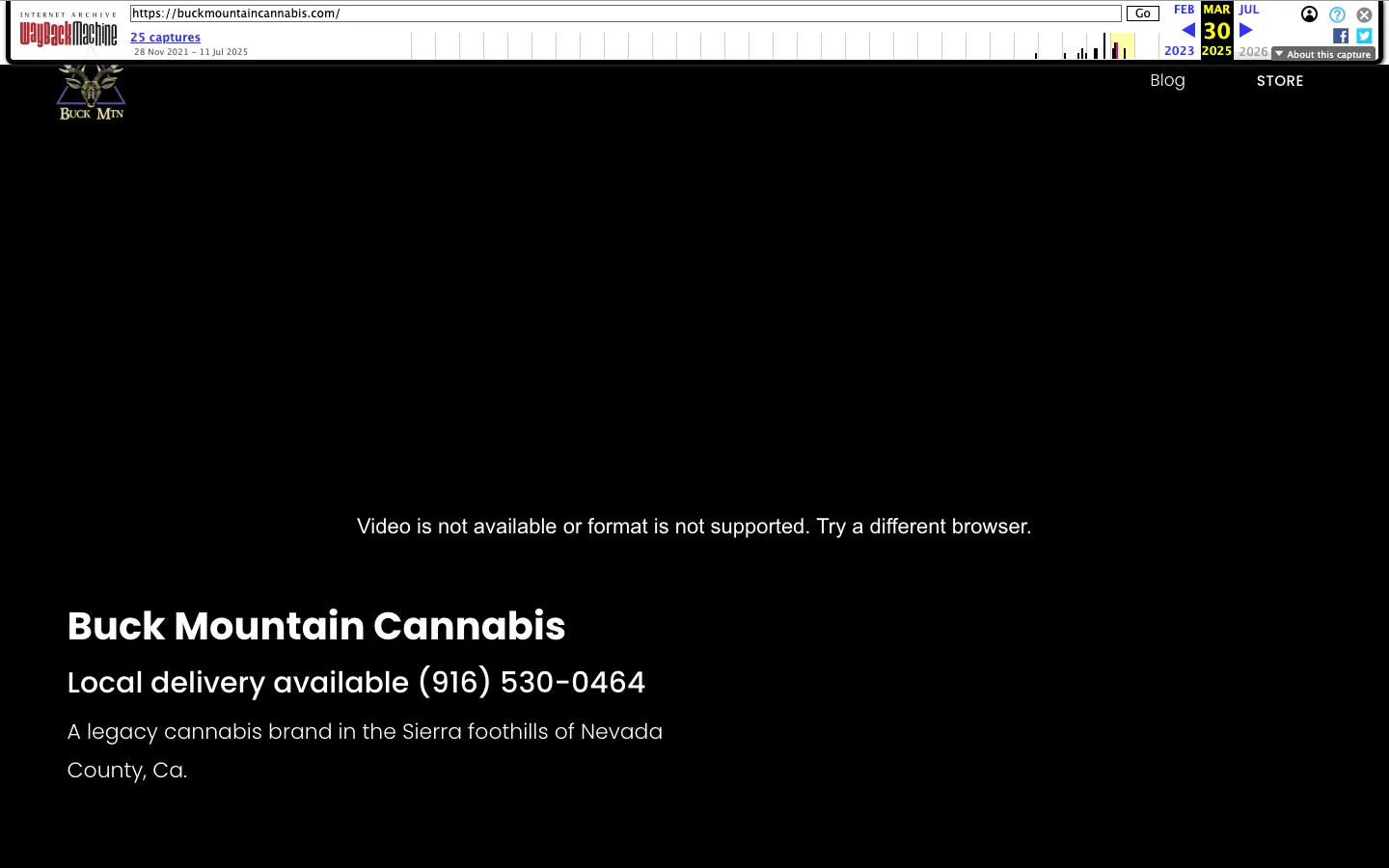
This is everything the legacy site had to offer above the fold. No pricing, no calendar, no booking — the funnel ended at a mailto.

Auto-scrolls through the modern site so you can see the booking surface, the package grid, the pricing table, and the calendar inline — without leaving this page.
The four beats
Scroll past the legacy frame. The four beats land in order. At the end, the modern site fades into the same window.
The legacy site was a brochure. No wholesale integration, no batch-level compliance surface, no shared identity layer across the brand portfolio.
Flower, rosin, extracts, trim, smalls, and pharma (when ready) are real sales channels with different unit economics. The catalog reflects that.
Next.js 15 storefront, Medusa 2.x backend, Nabis wholesale ingestion, Metrc compliance, OgLife identity. Shared infrastructure where it makes sense (chat widget, payment rails); brand-specific structure where it matters (category tree, copy, photography).
Same stack as BMH and LGP means a new SKU added to Buck Mountain inherits the messaging infrastructure, the payment policy, the chat widget, and the QR rewards layer for free.
The legacy site was a brochure. No wholesale integration, no batch-level compliance surface, no shared identity layer across the brand portfolio.
Flower, rosin, extracts, trim, smalls, and pharma (when ready) are real sales channels with different unit economics. The catalog reflects that.
Next.js 15 storefront, Medusa 2.x backend, Nabis wholesale ingestion, Metrc compliance, OgLife identity. Shared infrastructure where it makes sense (chat widget, payment rails); brand-specific structure where it matters (category tree, copy, photography).
Same stack as BMH and LGP means a new SKU added to Buck Mountain inherits the messaging infrastructure, the payment policy, the chat widget, and the QR rewards layer for free.
The legacy site at buckmountaincannabis.com was a static brochure — a brand with no infrastructure under the catalog. No wholesale integration, no batch-level compliance surface, and no shared identity with the rest of the brand portfolio.
The call was not to run the same store as the sister hemp brand, but to restart the catalog around real sales channels. Flower, rosin, extracts, trim, smalls, and pharma (held until its supply line is ready) each have different unit economics, so each became its own category surface rather than entries on a single products page.
The brand moved to a new domain, buckmountain.farm, on the same storefront-plus-commerce-engine pattern as the sister brands, with permanent redirects carrying traffic over from the old address. The wholesale catalog is ingested from the Nabis distribution platform, batch-level compliance tracking is backed by Metrc (the state track-and-trace system), and QR codes on packaging route through the portfolio's shared rewards and identity layer.
Shared infrastructure where it makes sense — the chat widget and payment rails come from the portfolio — and brand-specific structure where it matters: the category tree, copy, and photography are Buck Mountain's own. A new product added to the catalog inherits the messaging infrastructure, payment policy, live chat, and QR rewards for free, making this a brand restart that is part of a portfolio rather than a one-off site.
Before
After
What changed, with evidence
Flower / rosin / extracts / trim / smalls / pharma (pending supply line). Each is its own surface, not a single 'Products' page.
Wholesale catalog comes from Nabis; batch-level compliance tracking is Metrc-backed; QR scans on packaging route through OgLife to a unified rewards layer that spans BMH and LGP.